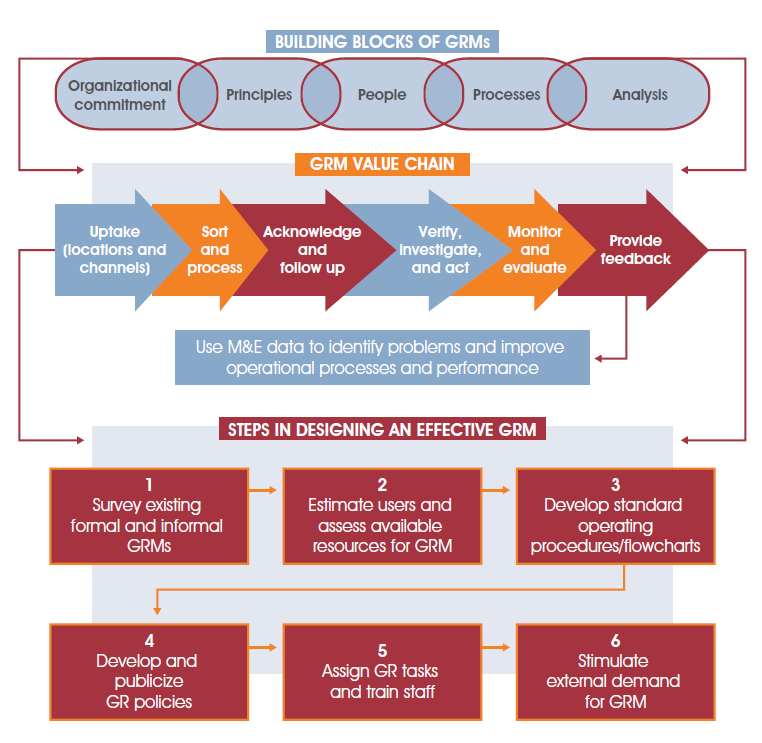
The Building Blocks of Grievance Redress Mechanisms (GRMs) consist of five interconnected pillars: organizational commitment, principles, people, processes, and analysis. In the context of development projects in Cambodia, such as those funded by the World Bank or Asian Development Bank in rural infrastructure, agriculture, or climate resilience, these building blocks serve as the foundational framework ensuring that local communities have a voice and that project negative impacts are mitigated. For instance, organizational commitment and principles establish the necessary institutional mandate and transparency required by Cambodian ministries (like the Ministry of Rural Development) to take citizen complaints/feedbacks seriously. Meanwhile, training the right people and defining clear, accessible processes ensures that rural Cambodians, including indigenous groups and vulnerable populations, can easily submit grievances through localized channels (such as village chiefs/leaders or commune councils). Finally, analysis allows project managers to leverage monitoring data to identify systemic issues, improve operational performance, and foster long-term accountability and trust between the government, development partners, and the local public.
Source: HOW-TO NOTES
Feedback Matters: Designing Effective Grievance Redress Mechanisms for Bank-Financed Projects